
Google Analytics 4
Google Analytics 4 (GA4) is an analytics system that measures events, conversions and behavior. Its reports often guide decision-making, even when measurement architecture may distort interpretation.
Google Analytics 4 – The meaning of the optimization signal
Most Google Analytics 4 (GA4) implementations are technically correct but strategically weak. GA4 presents reports in a clear and usable format even when optimization is aimed at the wrong objectives. Installing Google Tag Manager (GTM) tags alone is not enough if the measurement architecture does not translate business objectives into optimization signals.
Google Analytics 4 forms the meaning layer of measurement architecture. It determines what the optimization signal means: which events are treated as conversions and what value is assigned to them.
What will you get from this page?
This page covers the core role of the Google Analytics 4 (GA4) layer: how conversions and value should be defined so that the optimization signal guides decisions and automation based on business value rather than pure volume. You will also find a practical example of why treating all conversions as equal pushes budget in the wrong direction, along with links to Google Analytics 4 articles.
What makes conversion data strategically weak?
Strategically weak measurement means that the optimization signal does not distinguish value: profitable and unprofitable outcomes appear as the same signal. When conversions and value do not reflect profitability, budget allocation and automation begin to scale volume at the expense of quality, because advertising platform optimization follows exactly that signal.
Example – Ecommerce order
In ecommerce, every “order” is often treated as the same conversion. As a result, discounted products and low-margin orders win in optimization because they generate a high volume of conversions, even while the overall business outcome — margin — gets worse.
Before conversion data is used for decision-making, it must be verified that the optimization signal defined in GA4 reflects the real business outcome rather than just a technically recorded event.
Why is Google Analytics 4 (GA4) alone not sufficient for decision-making?
GA4 tells you what happened, but it does not automatically tell you what was profitable. If conversions and value do not distinguish business value, the optimization signal will easily steer toward volume instead of quality. In addition, the signal also depends on consent and the collection layer. If data is interrupted or formed incorrectly, Google Analytics 4 can still present it in clean reports even when the optimization signal is flawed from a decision-making perspective.
Reports may contain both measured and modeled data. Modeled data is not user-level measurement, but a statistical estimate of missing data.
Where should you start in Google Analytics 4?
Start with what defines the meaning of the optimization signal: conversions and value. Then make sure reporting is not hiding the problem and that the signal remains consistent across the full measurement chain.
GA4 in production: data quality and reporting risks
I use real traffic in these examples because test data does not reveal the actual limitations of measurement or the risks in decision-making. In the articles, I examine how Google Analytics 4 works in practice: structural reporting limitations, data quality, the meaning of the optimization signal, and the accuracy problems of “silent data.” These issues do not appear in standard reports, but they can significantly distort decisions.
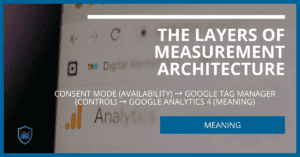
Layers of Measurement Architecture
Consent Mode (availability) → Google Tag Manager (control) → Google Analytics 4 (meaning) = optimization signal


Google Tag Manager – Signal control
Signal control How to manage the technical origin and quality of data

Google Analytics 4 – Signal meaning
Signal meaning How to turn raw data into conversions and decisions
Optimization Signal
When availability, control, and meaning come together, an optimization signal is formed
The optimization signal determines what algorithms learn, what kind of traffic they begin to favor, and where budget is allocated.
Recent articles
Why Google Analytics 4 Can Lead to Poor Decisions
Is your measurement fit for decision-making?
Get a list of decision risks and a concrete fix.