
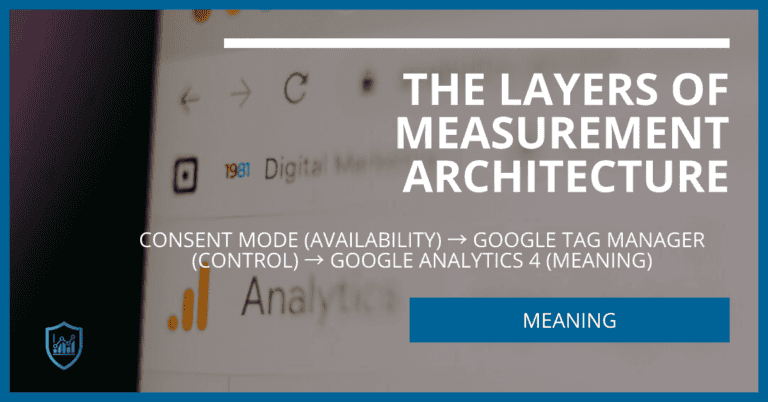
Measurement Architecture

Measurement architecture defines the structural design of an analytics implementation, including event schemas, naming conventions, data flows, integration logic, and governance processes. In GA4 and Google Tag Manager environments, measurement architecture determines whether data remains scalable, interpretable, and aligned with business objectives over time.

Weak measurement architecture often leads to inconsistent event definitions, duplicated tracking, missing parameters, and fragmented reporting. Strong measurement architecture ensures that conversions, revenue signals, and behavioral events are structured coherently across GA4, Google Tag Manager, and Google Ads.

Measurement architecture extends beyond technical configuration to strategic decisions about what should be measured and why. In privacy-aware ecosystems, it must incorporate consent signals, modeled data handling, and cross-platform integrations. A well-designed measurement architecture reduces implementation errors, simplifies analysis, and supports reliable decision-making across evolving regulatory and technical landscapes.