Google signals no longer direct Google Ads

In April 2026, Google published a guideline stating that data management in linked Google Analytics and Google Ads properties will be separated by purpose of use. Starting June 15, 2026, data used in Google Ads will be managed via consent mode on the Google Ads side, even when the data comes from Google Analytics. At the same time, the role of the Google signals setting narrows, and moving forward, it will only direct the linking of Google Analytics data to signed-in user data for behavioral reporting.
Introduction
Google states it is simplifying the settings and consent process used in connection with linking Google Analytics and Google Ads accounts. Such a message is easy to interpret as a technical change that requires no action. One inconsistency is removed, the management model is clarified, and life goes on.
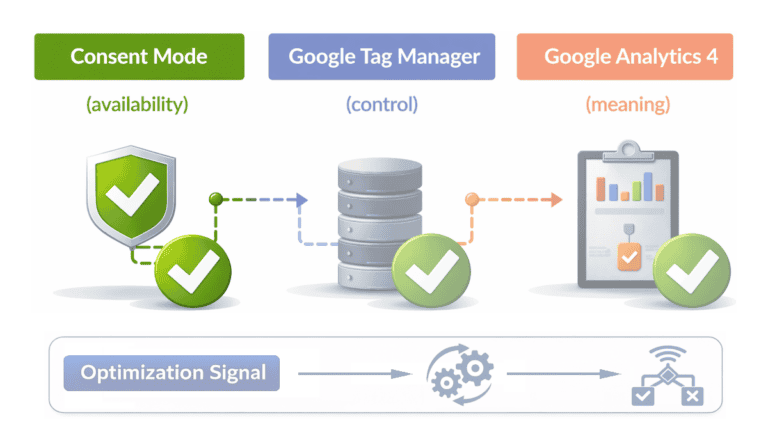
The essential aspect of this change is the shift in management logic. In many organizations, the idea persists that the Google signals setting also determines what the linked Google Ads account can use. It is exactly this assumption that becomes obsolete. When the control point shifts, the kind of optimization signal that remains available to Google Ads also changes. And when the optimization signal changes, algorithm behavior ultimately changes as well.
Google shifts Google Ads data management to consent mode (Signal availability)
Google announced in April 2026 that the management of data used in Google Ads within linked Google Analytics and Google Ads properties will change starting June 15, 2026. After this, data usage in Google Analytics will still be directed by the Google signals setting, but data usage in Google Ads will be managed exclusively through consent mode according to the user’s consent choices. This also applies to data shared from Google Analytics to Google Ads.
Google is shifting the management of Google Ads data usage to consent mode. The change looks small, but it directly affects what data Google Ads can use.
Current state before the change
Before June 15, 2026, it was justified to think that the Google signals setting also affects what data Google Ads can use. This is because the collection of Google Ads cookies and identifiers has been managed by both the Google Analytics Google signals setting and the consent mode advertising settings.
What is the Google signals setting and what will it affect moving forward?
The Google signals setting is an option in the Google Analytics admin settings used to manage the use of Google Analytics data in features related to Google signals. Until now, it has also impacted the collection of Google Ads cookies and identifiers. Once the change takes effect, the Google signals setting will no longer affect Google Ads data usage. Its role will thereafter be limited to Google Analytics behavioral reporting, meaning how data from Google Analytics sources can be linked to signed-in user data in reporting and user activity analysis.
Linking remains, but Google Analytics and Google Ads data usage are separated from each other
Starting June 15, 2026, Google Analytics and Google Ads data usage will be separated from each other. Data usage in Google Analytics is still directed by the Google signals setting, but data usage in Google Ads is managed only through consent mode. This also applies to data shared from Google Analytics to Google Ads. Because of this, one previously functional way to assess the situation on the Ads side will no longer be usable. It is no longer possible to deduce from Google Analytics settings what data Google Ads is actually allowed to use. The actual situation on the Ads side will be visible through consent mode settings moving forward.
Why Google signals no longer tell what data Google Ads uses
If the Google signals setting is currently turned off in GA4 settings, it alone no longer determines what data Google Ads can use. If the user accepts the ad_storage parameter, Google Ads starts using Ads cookies. Google also states that web and app activity that has received ad_storage permission is linked to Google’s signed-in user data. If this is not verified, a company may think it is restricting Google Ads data usage more than it actually is.
Where is Google Ads data usage managed moving forward?
Moving forward, the usage of data transmitted to Google Ads will be managed via consent mode. In practice, the decisive setting is ad_storage. The setting indicates whether the user has given permission for the use of advertising-related cookies and identifiers. This directly affects what data Google Ads gains access to.
This separation of signal data is just the beginning of a broader change. Google states that later in 2026, the management of data related to advertising personalization will similarly shift behind Google Ads’ own settings. In practice, this further reduces the role of Google Analytics in directing advertising data usage. Moving forward, the Ads account’s own settings and consent mode will determine even more directly what data coming from Analytics can be used in Google Ads.
Consent mode receives information about the user’s choice from a cookie banner, for example. After that, it directs how Google Analytics, Google Ads, and other tags are allowed to operate. If permission has been granted, data can be used more broadly. If permission has not been granted, usage is restricted.
On a website, this means one essential thing from an implementation perspective. The default consent mode state must be set before tracking begins sending data. When the user makes their choice, the information must be updated immediately. Google’s documentation emphasizes that the update must be made on the same page where the choice occurs. Otherwise, the information transmitted to Google Ads and Google Analytics may be incorrect or incomplete.
An error occurs if the user has just granted or denied consent, but the update does not have time to take effect on the same page. In this case, when the initial page loads, events or tags might operate based on the consent mode state that was valid before the user’s latest choice. In practice, this means data can be sent for a brief moment either too broadly or too restrictively relative to the choice the user has made.
The change affects the data used to direct advertising
In practice, this affects all data collected in Ads, bidding, optimization, and conversion measurement. When the available data changes, the system’s way of optimizing advertising will also change. In other words, the question is what kind of optimization signal gets to direct the Ads advertising budget moving forward.
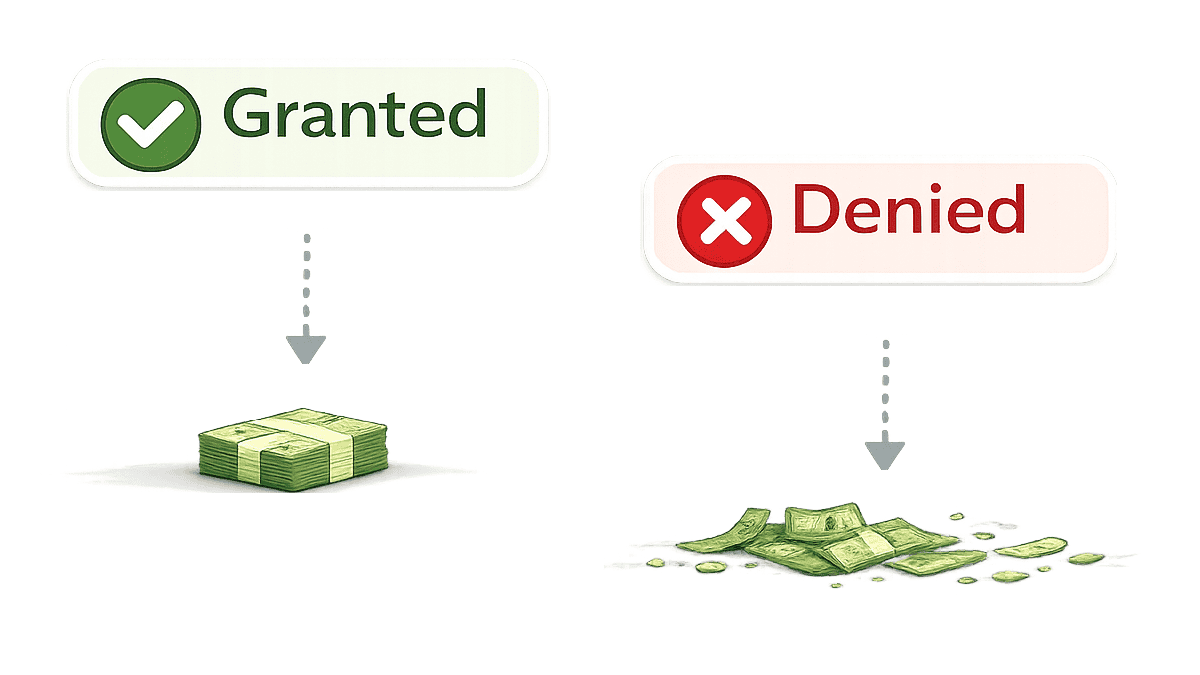
If an organization does not carefully check the change, it may continue directing advertising based on the previous management model. In this case, budget can be targeted based on data whose use the company no longer understands or controls correctly. In practice, the consequence can be that Google Ads optimizes traffic, audiences, and conversions with a different logic than the organization itself assumes. In such a situation, the problem ultimately shows up in money as the budget is misdirected.
Google offers additional time for some advertisers
Google says that for some users, the change will happen automatically without action. At the same time, Google recognizes that the situation is not equally simple for everyone. Therefore, it offers a 90-day extension via a separate form for advertisers who need more time to update privacy notices or tag and SDK configurations. In practice, this means that the change is not just an unnoticeable settings update for everyone. If Google signals are turned off or if documentation and implementation no longer correspond to each other, the impact should always be assessed on a case-by-case basis.
What risks are associated with the change?
The management of Google Ads data usage shifts to a point that companies often find harder to control correctly. ad_storage consent depends on the cookie banner, the consent mode implementation, and whether the user’s choice updates correctly immediately after the choice.
If Google signals are currently turned off and the necessary changes are not made, information may start unintentionally leaking to the advertising platform. This can happen when the user accepts the ad_storage parameter, at which point Google Ads starts using Ads cookies. Google documentation also states that web and app activity that has received ad_storage permission is linked to Google’s signed-in user data.
In a situation where a company attempts to block everything by setting the ad_storage default state to denied, the use of advertising cookies and device identifiers is prevented. According to Google, this affects all data collected in Ads, advertising measurement, and conversion tracking, and can weaken the performance of campaigns in the linked Ads account. In this case, the drawback is not excessive data usage but a weaker optimization signal. The end result can be seen as weaker advertising results, more inefficient budget use, and difficulty in targeting advertising to the right audiences.
Modeled data introduces more uncertainty when the user denies consent. If the original optimization signal used is already weak, a setup built on modeled data can also direct advertising in the wrong direction. In this case, the problem is not just the volume of data but also its business quality.
Practical risks
Google Ads can gain access to more data than the company understands it is allowing. Or data can be blocked more than the company intends. In both cases, the impact is seen in what data Ads optimizes with and where the budget is ultimately targeted.
Use case: The company thinks it has restricted Google Ads data usage
The company has previously turned off Google signals. The decision may have been made for privacy reasons or because they wanted to restrict advertising data usage this way. At the same time, consent mode has been implemented so that the user can accept ad_storage consent. ad_storage is the general consent mode consent signal for the use of advertising-related cookies and identifiers. It does not only apply to Google Ads. The same consent is often used as a condition for firing tags of other advertising platforms if the consent logic is built the same way in Google Tag Manager.
This risk arises most typically on a standard website that uses Google Tag Manager, Google Analytics 4, Google Ads linking, and a consent banner. The risk increases when different parts are in different hands. Marketing looks at Google Ads. The developer or agency manages the tags and banner.
At this point, the company’s own understanding, privacy communication, and technical implementation can diverge from each other. The company may think it has restricted Google Ads data usage more than it actually has. At the same time, Google Ads uses data according to the new logic.
What this means for consent mode
Consent mode transmits the user’s choice to Google and directs tag behavior based on it. If consent is denied, tags can send cookieless pings. In an advanced implementation, Google can use them for modeling.
Who is responsible for the collected data?
Google is responsible for its own product. An advertising agency or developer can be responsible for the implementation according to a contract. According to Google’s terms, the ultimate responsibility is always on the company itself. The company is responsible for ensuring that data usage is implemented correctly, that the customer has been informed appropriately, and that operations are lawful. Google can change settings logic and an agency can implement tags, but the company is responsible for ensuring that consent, privacy communication, and practical data usage match each other. If these do not match, it does not remain merely a technical error, but can turn into a privacy risk.
Google also notes this in its own guidelines. A company must inform end users about appropriate privacy practices, obtain permission to link activity happening on the site to Google’s signed-in user data, and inform users of the possibility to manage and delete data on the My Activity page. In practice, this means responsibility is not limited to technical implementation. The company must also ensure that what is told to the user corresponds to what actually happens in data processing.
The shift of responsibility is also visible in the processing of automatically collected IP addresses. Google states that IP addresses automatically collected by the Google Tag and SDK are encrypted and transferred to the linked Google Ads account. After this, they are managed according to Google Ads settings, configurations, and relevant terms of service. This emphasizes the company’s responsibility to ensure that privacy communication and implementation match each other on the Ads side as well.
Check these things before the change (June 15, 2026)
Before the deadline, a company should verify the following things:
Do you know what data usage the user is granting permission for when they accept ad_storage consent?
Does the user’s choice update correctly immediately, or can data be sent to Google before the new consent mode state has time to take effect?
Do the privacy texts, consent banner, and practical implementation correspond to each other even when data is used to direct advertising?
Do you know what happens to advertising if Google Ads gains access to more data than you intended?
Do you know what happens to campaigns if Google Ads gains access to less data than effective optimization would require?
The answers to these questions indicate whether the company’s own understanding of data usage is what is actually happening.
Conclusions
Starting June 15, 2026, the Google signals setting no longer tells what data Google Ads can use. On the Google Ads side, data usage is directed by the consent mode’s ad_storage setting. This also applies to data shared from Google Analytics to Google Ads.
The change directly affects what data Google Ads uses to build audiences, optimize bidding strategy, and measure conversions. If a company still assesses the situation based on the Google signals setting, it may think it is restricting data usage more than it actually is. Or it may block data so much that the optimization signal weakens and campaign results suffer.
The essential question for a company is simple: do consent, privacy communication, technical implementation, and the data used by Google Ads correspond to each other? If they do not correspond, the consequence is either a privacy risk, weaker measurement, or a misdirected advertising budget.
Google can change settings logic and an agency can implement tags, but the responsibility remains with the company. The company must ensure that data usage is implemented correctly, that it has been communicated to the user correctly, and that advertising is directed with data whose usage is also correctly understood by the company itself.
Ultimately, the company’s own measurement architecture determines what kind of data remains available to Google Ads. Therefore, the company must ensure that consent, implementation, and the data used for optimization support the same business objective.
Further reading and official sources
Updates to Google Analytics Data Controls
Consent mode
Set up consent mode on websites
Core Content of keijomammi.com Measurement Architechture Hub